

Partner yoga transforms traditional solo practice into a shared journey of connection, trust, and mutual support. This ancient practice, rooted in the principles of cooperation and mindful communication, offers unique opportunities to deepen relationships while enhancing physical and emotional well-being.
The beauty of practicing yoga poses for two lies in the enhanced awareness and accountability that comes from sharing space with another person. When you practice alongside a partner, friend, or loved one, you naturally become more present and attentive to both your own body and your partner’s needs and limitations.
Research demonstrates that synchronised movement activities, including partner yoga, can increase oxytocin levels by up to 25%, promoting feelings of trust, bonding, and emotional connection¹. This biochemical response helps explain why many practitioners find partner yoga sessions particularly rewarding and relationship-enhancing.
Partner practice also offers practical advantages for beginners. Having a supportive partner can provide physical assistance, emotional encouragement, and helpful feedback that accelerates learning and builds confidence in your yoga journey.
Benefits of Practicing Yoga Poses in Pairs

The advantages of partner yoga extend far beyond the physical postures themselves. When two people come together in a mindful movement, they create opportunities for profound connection, personal growth, and shared wellness experiences.
Physical and Physiological Benefits
Practicing yoga poses in pairs often allows for deeper stretches and more challenging poses than solo practice. Your partner can provide gentle assistance, helping you achieve proper alignment while exploring your flexibility boundaries safely.
The mirroring effect of partner yoga helps improve proprioception, your body’s awareness of its position in space. Studies show that partner-assisted stretching can increase flexibility by 18% more than solo stretching over a six-week period². This enhanced flexibility comes from the gentle, sustained assistance that a trusted partner can provide.
Balance and stability often improve through partner yoga because you learn to rely on both your own core strength and your partner’s support. This dual foundation creates opportunities to explore more challenging poses while building confidence in your abilities.
Cardiovascular benefits emerge from the increased engagement and longer hold times common in partner practice. The social aspect naturally extends session duration, while the shared energy often leads to more dynamic movement sequences.
Emotional and Psychological Advantages
The trust-building aspects of partner yoga create profound emotional benefits. Learning to rely on another person while maintaining your own stability requires vulnerability and communication skills that transfer to other life areas.
Key Emotional Benefits:
- Enhanced communication skills through non-verbal body language awareness
- Increased empathy and understanding through shared physical experiences
- Reduced stress and anxiety through oxytocin and endorphin release
- Improved self-confidence through supportive partnership dynamics
- Deeper mindfulness practice through heightened present-moment awareness
Social connection research indicates that individuals who practice partner activities show 23% greater relationship satisfaction compared to those who engage only in individual wellness practices³. This improvement stems from shared goals, mutual support, and the intimacy created through synchronised breathing and movement.
The playful nature of partner yoga also provides natural stress relief. Laughter and joy often emerge spontaneously during partner sessions, releasing tension and creating positive associations with wellness practices.
Yoga Partner Poses for Beginners
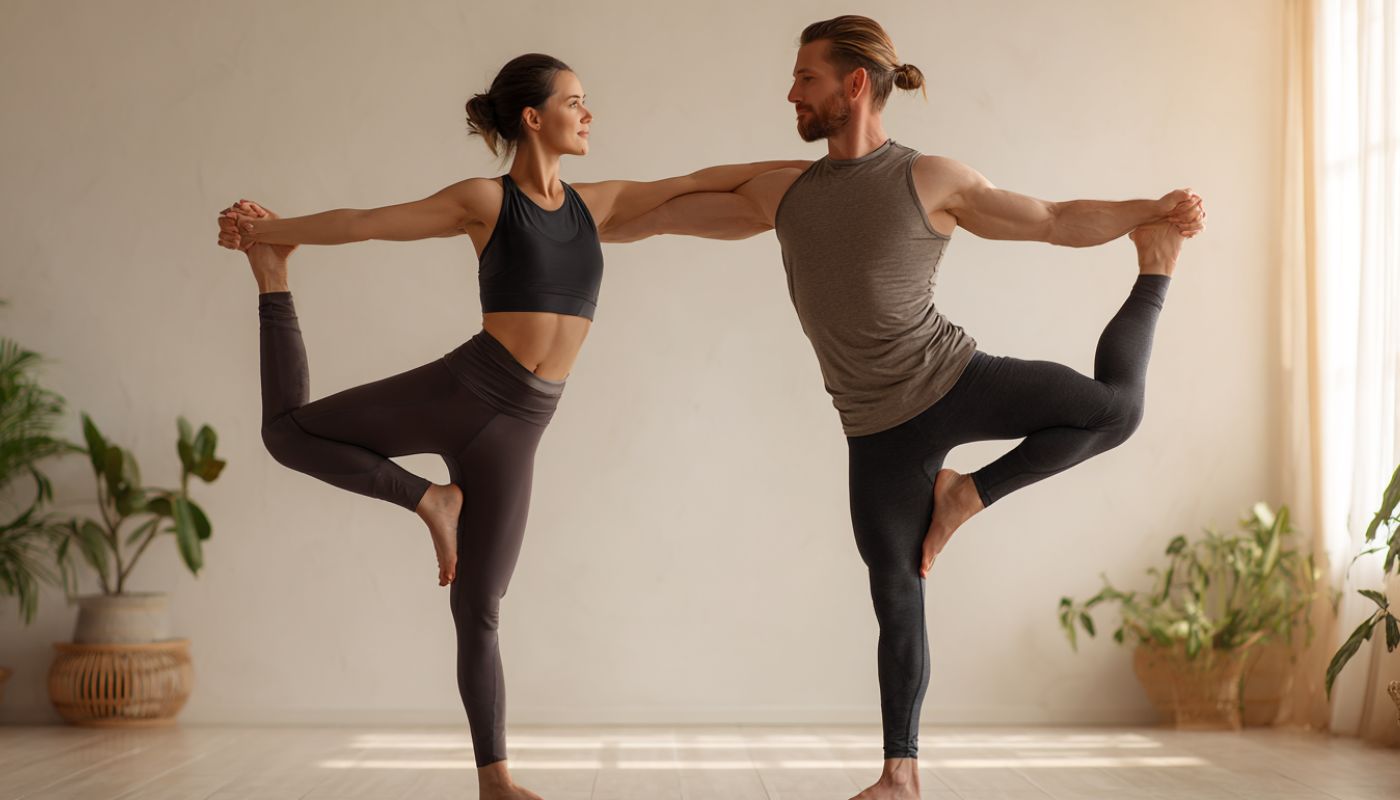
Starting your partner yoga journey with accessible poses builds confidence while establishing the communication patterns essential for more advanced practice. These foundational poses focus on connection, alignment, and trust-building rather than complex movements.
Fundamental Connection Poses
Begin every partner session with simple poses that establish physical and energetic connection. These foundational postures create the trust and awareness necessary for more challenging poses later in your practice.
The Partner Child’s Pose creates an immediate calming connection. One partner sits in a traditional child’s pose while the other sits gently on their sacrum, providing grounding weight. This pose promotes deep relaxation while establishing physical trust between partners.
Back-to-Back Breathing offers a perfect introduction to synchronised awareness. Sitting spine-to-spine, partners breathe together, noticing how their breath rhythms naturally synchronise. This simple practice builds the foundation for all other partner work.
Partner Twists introduce assisted movement. Sitting back-to-back, partners reach opposite arms skyward then twist in opposite directions, using gentle pressure against each other’s arms to deepen the spinal rotation safely.
Gentle Standing Poses
Standing poses in partnership provide stability while building trust in shared support systems. These poses teach weight distribution, communication, and mutual assistance principles.
Partner Tree Pose challenges balance while providing support. Partners stand side by side, inside arms around each other’s waists, lifting outside legs into tree position. The shared foundation creates stability while maintaining individual challenge.
Double Forward Fold offers assisted stretching benefits. Partners stand back-to-back, reaching through legs to hold each other’s wrists, creating mutual assistance for deeper forward folding. This pose demonstrates how partnership can enhance flexibility safely.
Establishing proper partner yoga foundation requires attention to safety, communication, and gradual progression. Beginning practitioners should focus on simple poses that build trust while teaching essential partner yoga principles.
Progressive Skill Building
Start with poses where both partners maintain their own weight and stability, using each other primarily for gentle assistance and enhanced stretching. These poses build trust while teaching partnership principles without requiring complete weight dependence.
Seated Spinal Wave teaches synchronised movement. Partners sit facing each other in a comfortable cross-legged position, holding each other’s wrists. One partner initiates gentle side-to-side spinal waves while the other follows, then switches leadership roles.
Partner Cat-Cow synchronises breath and movement. Partners come to tabletop positions facing each other, moving through cat and cow poses together. This familiar movement becomes enhanced through eye contact and synchronised breathing.
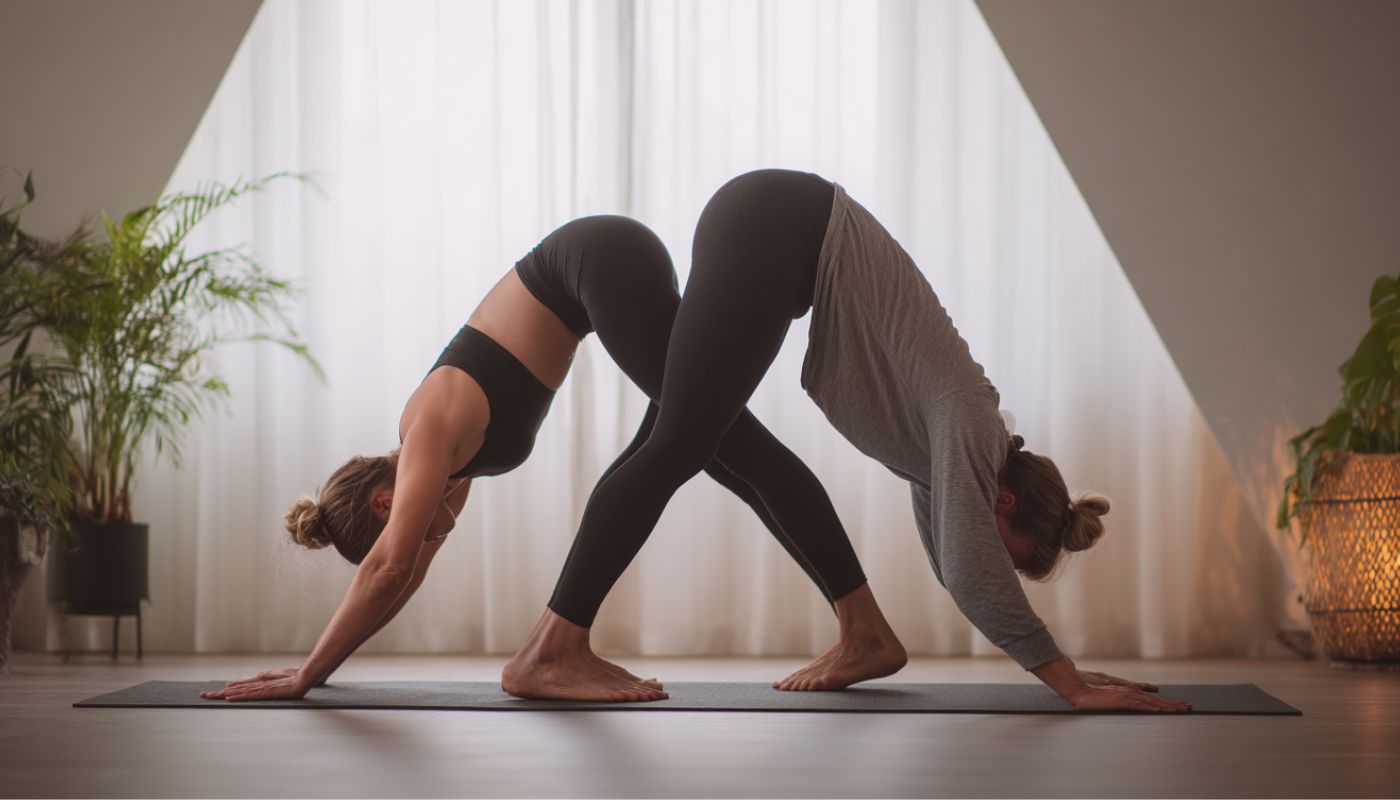
Double Downward Dog introduces weight sharing gradually. One partner comes to the downward dog while the other places hands on their sacrum and walks feet up their back, creating an inverted V-shape. This pose requires clear communication about comfort and stability.
Trust-Building Sequences
Advanced partnership requires deep trust and communication. Build these qualities through progressive sequences that gradually increase interdependence and weight sharing.
Partner Warrior III challenges balance through mutual support. Partners face each other, holding each other’s wrists while lifting opposite legs behind them. The shared grip provides stability while maintaining individual strength requirements.
Supported Bridge Pose offers gentle backbending assistance. One partner lies in bridge pose while the other kneels at their head, providing gentle heart opening assistance through light pressure on the chest. This pose teaches giving and receiving support.
Flying Warrior Pose represents advanced trust development. The base partner lies on their back, feet pressing into the flying partner’s hip points while holding their hands. The flyer extends into warrior III shape, supported by the base’s feet and hands. This pose requires complete trust and clear communication.
Essential Communication Principles
Successful partner yoga relies on clear, honest communication about comfort levels, physical limitations, and energy fluctuations. Establish communication protocols before attempting any poses to ensure safety and mutual respect.
Communication Guidelines:
- Use clear “yes,” “no,” and “stop” signals that both partners understand
- Discuss injuries, physical limitations, or areas of sensitivity beforehand
- Check in regularly during poses about comfort levels and adjustments
- Practice listening to both verbal and non-verbal communication cues
- Maintain eye contact when appropriate to enhance connection and trust
Weight sharing requires particular attention to body mechanics and joint safety. Never force positions or ignore discomfort signals from your partner. The goal is mutual support and enhancement, not competition or strain.
Create safe words or signals for immediate release from any position. Partner yoga should always feel supportive and comfortable, never forced or painful.
More Accessible Options for Everyone
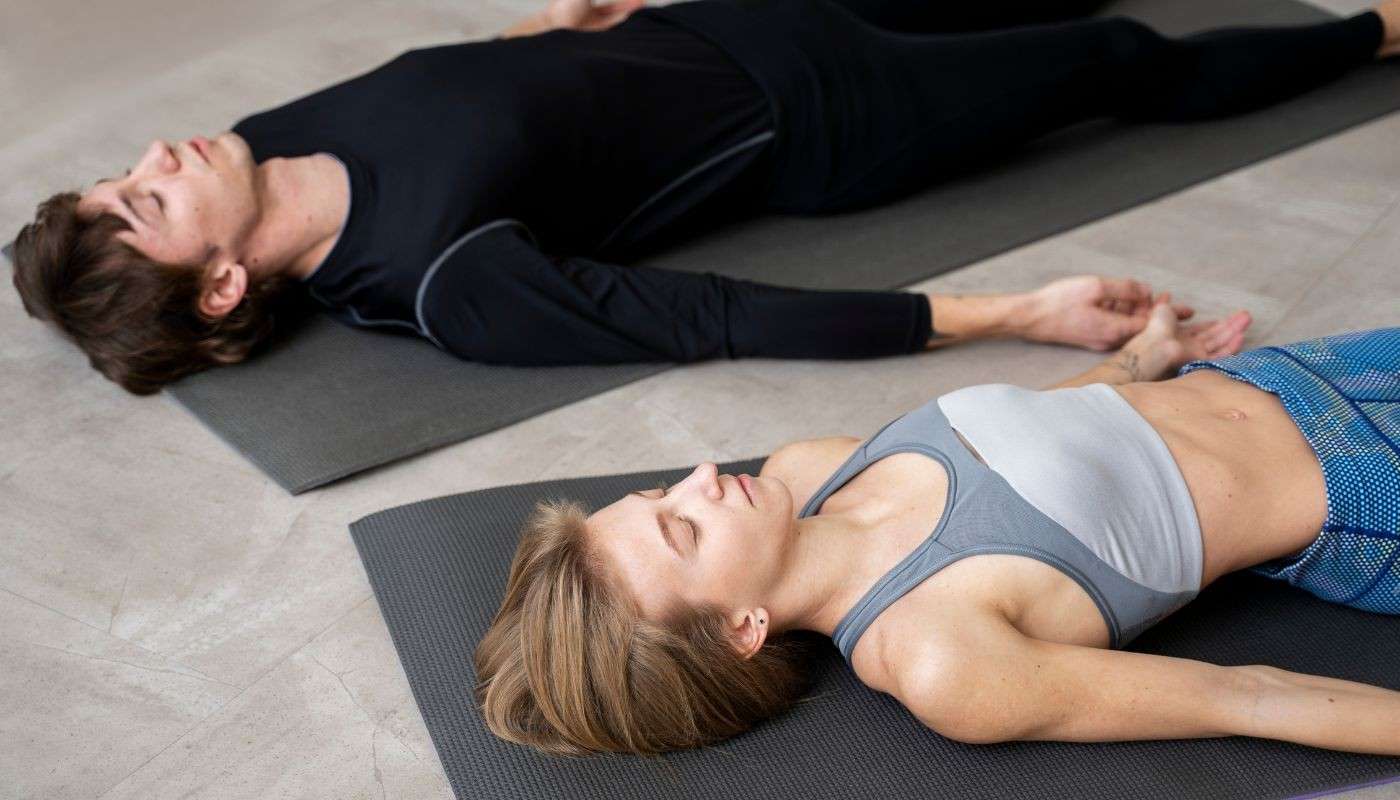
Accessibility in partner yoga means creating options for various fitness levels, body types, and physical abilities. Easy yoga poses with a partner should focus on connection and mutual support rather than complex movements or extreme flexibility requirements.
Gentle Restorative Poses
Restorative partner yoga emphasises relaxation, stress relief, and gentle connection. These poses provide wellness benefits without requiring strength or flexibility, making them perfect for beginners or those seeking gentle practice.
Partner Savasana enhances relaxation through shared energy. Partners lie side by side, one hand on their own heart, the other hand on their partner’s heart. This simple connection amplifies the calming effects of traditional final relaxation.
Supported Child’s Pose Variation offers comfort and safety. One partner sits in a comfortable cross-legged position while the other rests in child’s pose with their torso across the seated partner’s lap. This nurturing position provides both grounding and comfort.
Leg Wall Pose Variation creates gentle inversion benefits. Partners lie on their backs with legs up a wall, heads pointing toward each other, hands touching. This pose combines inversion benefits with partnership connection.
Adaptive Modifications for All Bodies
Everybody deserves access to partner yoga benefits. Adaptive modifications ensure that physical limitations, age differences, or size variations don’t prevent successful practice.
Chair-Supported Poses accommodate limited mobility. Partners can practice spinal twists, arm stretches, and breathing exercises while seated in chairs, maintaining partnership benefits without floor work requirements.
Wall-Assisted Poses provide additional stability. Using walls for support allows partners to explore poses that might be challenging without the third point of contact, making advanced poses accessible to beginners.
Prop-Enhanced Practice reduces strain and increases comfort. Blocks, straps, blankets, and bolsters help partners achieve proper alignment and comfort, making poses accessible regardless of flexibility or strength limitations.
3 Yoga Poses for Couples Beginner Level to Strengthen Relationships and Love
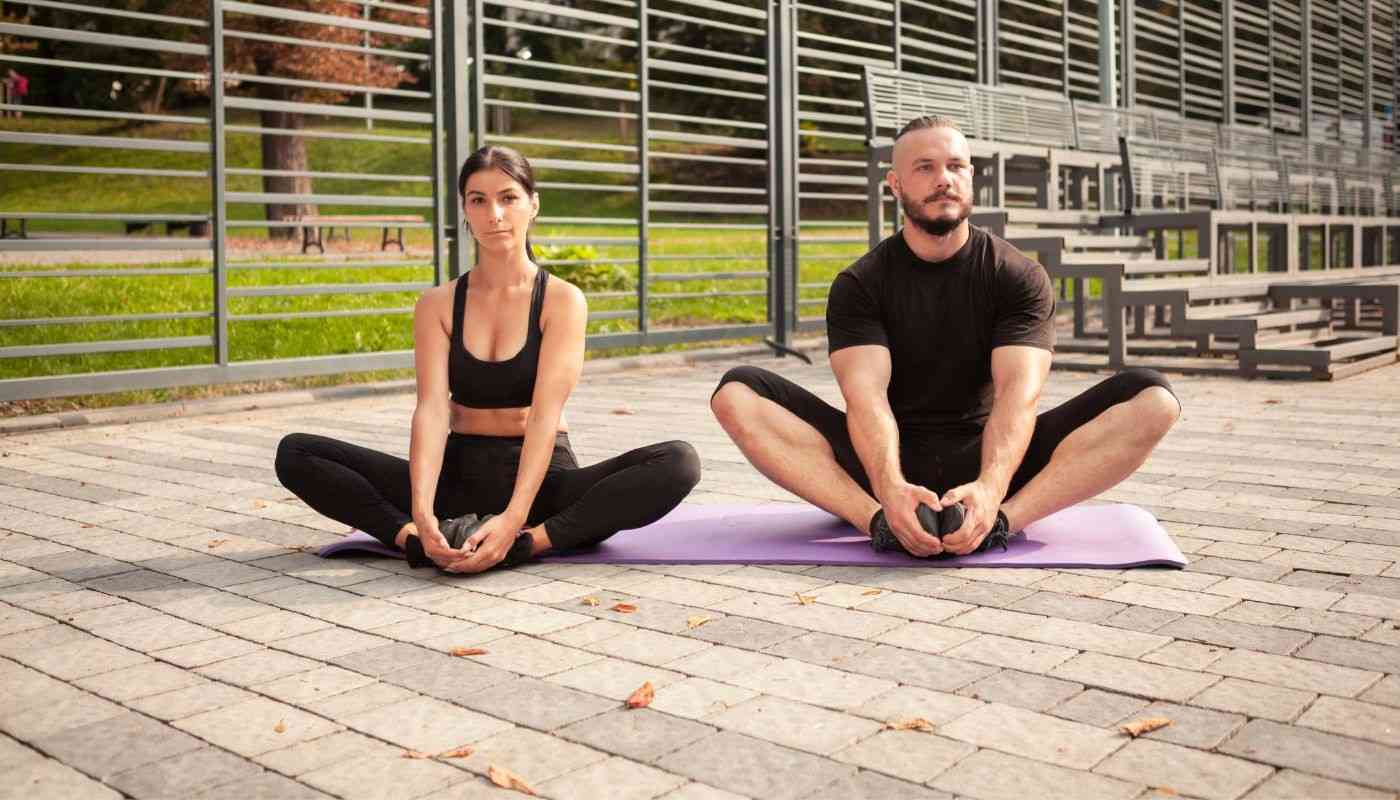
Partner yoga offers couples unique opportunities to build intimacy, improve communication, and create shared wellness experiences. Research shows that couples who engage in novel, challenging activities together report 37% higher relationship satisfaction⁴.
Intimacy-Building Poses
Certain partner yoga poses naturally enhance intimacy through eye contact, synchronised breathing, and gentle physical connection. These poses create opportunities for presence and vulnerability that strengthen emotional bonds.
Heart Opening Partner Pose creates emotional connection. Partners sit back-to-back, one in child’s pose while the other gently arches backward over their partner’s back. This pose combines heart opening with trust and support, metaphorically and physically opening to each other.
Partner Meditation Pose builds mindful connection. Sitting face-to-face in a comfortable position, partners maintain gentle eye contact while breathing together. This simple practice builds presence and emotional intimacy through shared awareness.
Supported Backbend offers giving and receiving practice. One partner lies over the other’s bent legs, receiving passive heart opening while the supporting partner practices strength and stability. This pose teaches both partners different aspects of support and trust.
Communication Enhancement Through Movement
Partner yoga naturally improves communication skills through the necessity of clear, kind, and immediate feedback. These communication skills transfer directly to relationship interactions outside yoga practice.
Dynamic Communication Poses:
- Partner breathing exercises that require verbal and non-verbal coordination
- Assisted stretches that demand immediate feedback about comfort and intensity
- Balance poses requiring ongoing communication about stability and support
- Flow sequences where partners must coordinate timing and movement transitions
- Relaxation poses involving gentle massage or pressure that requires comfort level communication
The non-competitive nature of partner yoga creates safe space for vulnerability and honest communication. Partners learn to express needs, offer support, and receive assistance without ego or judgment.
Regular partner yoga practice develops emotional intelligence through increased awareness of your partner’s physical and emotional states. This heightened sensitivity creates deeper understanding and empathy in daily life interactions.
Getting Started Safely
Safety considerations become paramount when practicing with a partner. Unlike solo practice where you control all variables, partner yoga requires attention to another person’s limitations, comfort levels, and physical capabilities.
Safety Protocols and Guidelines
Establish comprehensive safety protocols before attempting any partner poses. These guidelines protect both partners while maximising the benefits of shared practice.
Begin every session with individual warm-up to prepare your bodies for partnership work. Cold muscles and joints increase injury risk, particularly when adding the variables of shared weight and assisted stretching.
Discuss injuries, physical limitations, and areas of sensitivity before practice. Past injuries, current discomfort, or medical conditions should influence pose selection and modification approaches.
Essential Safety Practices:
- Always warm up individually before attempting partner poses
- Communicate clearly and immediately about any discomfort or concern
- Respect your partner’s physical limitations and comfort boundaries completely
- Move slowly and deliberately, avoiding sudden or jerky movements
- Maintain your own structural integrity rather than relying completely on your partner
Exit strategies should be discussed and practiced for every pose. Know how to safely and quickly separate from any position if discomfort or instability occurs.
Building Your Partner Yoga Journey
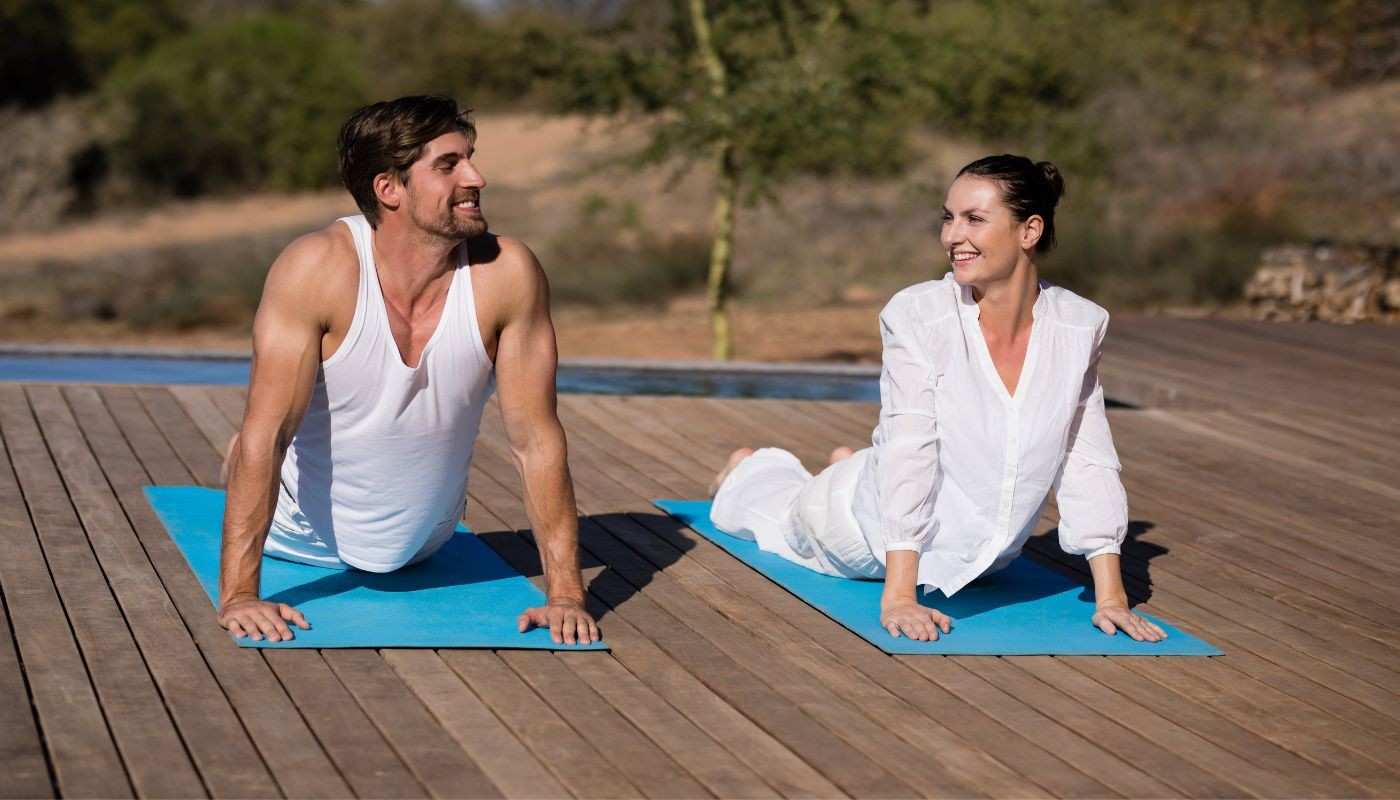
The journey into partner yoga represents more than learning physical poses it’s an invitation to explore trust, communication, and shared growth in unique and meaningful ways. Every partnership brings different strengths, challenges, and dynamics that influence how poses are approached and modified.
Remember that partner yoga is ultimately about connection rather than perfection. The most valuable aspects of practice often emerge from moments of laughter, gentle adjustment, or simply breathing together in quiet presence.
Start slowly, communicate openly, and allow your practice to evolve naturally as trust and familiarity develop. The poses themselves are simply tools for building deeper understanding, physical awareness, and emotional connection between partners.
Whether you’re practicing with a romantic partner, family member, or friend, partner yoga offers accessible pathways to enhanced wellness, stronger relationships, and greater self-awareness through the beautiful mirror of shared movement and breath.
References:
- Carter, C.S., et al. (2008). “Oxytocin pathways and the evolution of human behavior.” Annual Review of Psychology, 59, 17-39.
- Feland, J.B., et al. (2001). “The effect of duration of stretching of the hamstring muscle group for increasing range of motion in people aged 65 years or older.” Physical Therapy, 81(5), 1110-1117.
- Aron, A., et al. (2000). “Couples’ shared participation in novel and arousing activities and experienced relationship quality.” Journal of Personality and Social Psychology, 78(2), 273-284.
- Reissman, C., et al. (1993). “Does marriage operate as a stress buffer?” Journal of Health and Social Behavior, 34(3), 220-232.
- Robles, T.F., et al. (2014). “Marital quality and health: A meta-analytic review.” Psychological Bulletin, 140(1), 140-187.