

Written by: Aditi Koli, Content Writer
Reviewed & Edited by: Dr. Dooa Arif, Content Strategist
Estimated Reading Time: 7 minutes
TL;DR
Wearable technology in 2025 spans ten major categories, from smartwatches and fitness trackers to health monitors, smart rings, and Augmented Reality (AR) or Virtual Reality (VR) devices.
These wearables track everything from heart rate and sleep to blood pressure and glucose levels, offering tailored insights for both fitness and medical use. Innovations like smart shoes, posture correctors, and athletic wearables enhance performance and recovery. With improved sensors, longer battery life, and seamless app integration, wearables are becoming essential tools for health, wellness, and everyday convenience.
Wearable technology has evolved far beyond simple fitness trackers, with cutting-edge devices now offering advanced health monitoring capabilities. From sleep tracking to real-time heart rate monitoring and recovery analytics, these devices are becoming essential tools for individuals seeking to optimize their health and performance. 61% of global users report improved health outcomes on using wearable health trackers.¹
In this blog, we explore the best wearable technology examples available in 2025, highlighting top features across various categories-from smartwatches to specialized health monitors.
Types of Wearable Technology Devices in 2025
Smartwatches
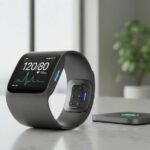
Smartwatches are multifunctional devices worn on the wrist that combine timekeeping with advanced health and fitness tracking features. They typically include sensors for ECG, heart rate, blood oxygen, and sleep monitoring. Smartwatches often integrate with smartphone apps, providing notifications, fitness tracking, GPS navigation, and even payment features. High-end models offer clinical-grade sensors and seamless integration with health data systems.
Key Features: Heart rate monitoring, ECG, GPS, sleep tracking, notifications, integration with apps.
Fitness Trackers
Fitness trackers are designed primarily for monitoring physical activity. They track metrics like steps, calories burned, heart rate, and sleep patterns. Some advanced models offer continuous heart rate monitoring, stress tracking, and built-in GPS for outdoor activities. Fitness trackers are often more affordable and have longer battery life compared to smartwatches, making them ideal for daily fitness tracking.
Key Features: Step counting, heart rate monitoring, calorie tracking, sleep monitoring, lightweight design.
Health Monitoring Devices
By 2026, the global market revenue for medical wearables tech is expected to reach USD 89.3 million.² These wearable tech brands are specifically designed for continuous health monitoring, focusing on specific health metrics like blood pressure, blood oxygen levels, and glucose. They are often used by individuals managing chronic conditions or seeking to monitor overall health. These devices can provide real-time health data and are typically more medically oriented compared to fitness trackers or smartwatches and are a niche product of well-known wearable health technology companies.
Key Features: Blood pressure tracking, blood oxygen monitoring, glucose monitoring, ECG functionality, continuous health data collection.
Running Wearables
Running wearables are specialized devices for athletes, particularly runners. These devices offer precise tracking of running dynamics, including pace, distance, stride length, and cadence. Some also include advanced metrics like VO₂ max, lactate threshold, and heart rate variability. With enhanced GPS tracking, these wearables provide accurate data even in challenging environments – thus making their mark as the best running wearable technology monitors.
Key Features: GPS tracking, pace and cadence tracking, heart rate monitoring, VO₂ max, lactate threshold.
Athletic Wearables
Athletic wearables are designed to optimize performance and recovery for athletes. They monitor metrics like strain, recovery readiness, and sleep quality. These devices are built for continuous wear and focus on providing insights into an athlete’s physical state, helping optimize training schedules and prevent overtraining. They often track breathing, heart rate, and recovery data in real-time.
Key Features: Recovery tracking, strain measurement, sleep analysis, heart rate, continuous wear, real-time monitoring.
Smart Rings
Smart rings are compact wearable devices designed to track various health metrics without the bulk of a smartwatch. They can monitor heart rate, sleep patterns, and activity levels. Some models also track body temperature and provide insights into wellness, offering a discreet and stylish alternative to wrist-worn devices.
Key Features: Sleep tracking, heart rate monitoring, activity tracking, compact design, discreet usage.
VR and AR Wearables
Virtual reality (VR) and augmented reality (AR) wearables are devices that offer immersive experiences, often used for gaming, training, or even medical applications. These devices have sensors and displays integrated into headsets or glasses, allowing users to interact with virtual environments or overlay information onto the real world.
Key Features: Immersive experiences, interactive environments, gaming, training, medical simulations.
Smart Glasses
Smart glasses integrate technology into eyeglasses, offering features such as hands-free notifications, navigation, and health tracking. Some models are designed for augmented reality (AR), allowing users to view and interact with digital information displayed directly onto the lenses.
Key Features: Hands-free notifications, navigation, AR capabilities, fitness tracking, camera integration.
Posture Correctors
Wearable posture correctors use sensors to monitor body alignment and alert the user when they slouch or adopt improper posture. These devices help improve posture over time and reduce strain on the back and neck by providing feedback through vibration or other forms of alerts.
Key Features: Posture monitoring, vibration feedback, back and neck support, real-time correction.
Smart Shoes
Smart shoes come embedded with sensors that track walking patterns, pressure distribution, and overall movement. They are often used for fitness and health monitoring, providing data on running form, gait analysis, and walking efficiency. Some advanced models are used in rehabilitation and physiotherapy for post-injury recovery.
Key Features: Gait analysis, movement tracking, pressure monitoring, fitness tracking, rehabilitation support.

Conclusion
Wearable tech has evolved significantly, offering a wide range of devices tailored to specific needs-whether it’s health monitoring, fitness tracking, performance optimization, or immersive experiences.
Each wearable device type provides distinct features that cater to different users, from athletes and fitness enthusiasts to individuals managing chronic health conditions. With advancements in sensor technology, the future of wearables promises even more integrated, accurate, and versatile solutions.

FAQs
The best wearable technology devices for women in 2025 include features like advanced sleep and recovery tracking, comprehensive health monitoring including menstrual cycle monitoring and seamless integration with healthcare providers, at an accessible price point.
The 12 different types of wearable technology include smartwatches, fitness trackers, smart rings, VR headsets, AR glasses, sleep trackers, heart rate monitors, ECG monitors, smart clothing, smart shoes, wearable cameras, and body-worn sensors for health monitoring.
References
- Global Growth Insights. (2025). Wearable technology market growth & forecast 2025–2034. https://www.globalgrowthinsights.com/market-reports/wearable-technology-market-105512
- Coolest Gadgets. (2025, February 5). Wearable devices statistics by usage, revenue, and facts. Coolest Gadgets. https://coolest-gadgets.com/wearable-devices-statistics
Get in Touch with Us
We’d love to hear from you—share your thoughts or ask a question!