

Written by: Aditi Koli, Content Writer
Reviewed & Edited by: Dr. Dooa Arif, Content Strategist
Estimated Reading Time: 7 minutes
TL;DR
As 2025 unfolds, wearable devices technology stands at an inflection point, with groundbreaking innovations poised to transform personal health monitoring.
This year’s breakthroughs include non-invasive glucose monitors, smart rings with blood pressure sensors, and long-lasting biosensor patches that track vital signs continuously. These innovations combine precision, comfort, and style-bridging medical science and daily life. Advanced AI ecosystems now interpret data conversationally, syncing with telemedicine and smart home systems for proactive health management. Despite privacy and accessibility challenges, wearable devices in 2025 are redefining personal health as predictive, connected, and effortlessly integrated.
The wearable technology devices market enters 2025 with unprecedented momentum, projected to reach £138 billion as breakthrough innovations transition from research laboratories to consumer availability¹. This year marks a pivotal shift where wearable gadgets transcend fitness tracking to become legitimate medical instruments integrated into standard healthcare protocols.
Three transformative trends define 2025’s landscape: non-invasive continuous monitoring of biomarkers previously requiring blood draws, artificial intelligence models predicting health events weeks in advance, and seamless integration with telemedicine platforms enabling real-time clinician intervention. Regulatory bodies worldwide are expediting approval pathways for medical-grade wearables, recognising their potential to alleviate healthcare system pressures.
The wearable devices for health launching this year incorporate sensor fusion architectures combining optical, electrical, acoustic, and thermal measurements. This multi-modal approach eliminates the accuracy limitations plaguing earlier generations, with clinical validation studies demonstrating equivalence to traditional diagnostic equipment.
Consumer expectations have matured beyond novelty-2025’s successful devices must deliver clinically meaningful insights whilst respecting privacy, maintaining week-long battery life, and integrating unobtrusively into daily routines.
Wearable Devices Healthcare: Revolutionary Clinical Applications Are Here
Wearable devices healthcare applications in 2025 extend far beyond passive monitoring into active therapeutic intervention. The breakthrough innovation arriving this year is closed-loop systems that detect physiological imbalances and automatically initiate corrective responses without user intervention.
The five transformative healthcare applications launching in 2025 include:
- Predictive cardiology platforms:
Detecting impending cardiac events 72 hours before occurrence through subtle rhythm pattern analysis
- Metabolic optimization systems:
Real-time glucose monitoring paired with AI dietary recommendations preventing glycaemic spikes
- Neurological monitoring devices:
Identifying early Parkinson’s and Alzheimer’s indicators through gait analysis and tremor detection
- Respiratory surveillance tools:
Continuous lung function assessment for asthma and COPD management with environmental trigger mapping
- Mental health biomarker tracking:
Correlating physiological stress signatures with psychological wellbeing for early intervention
Research published in early 2025 demonstrates that predictive wearables reduce emergency department visits by 44% amongst chronic disease patients whilst improving quality of life scores significantly². Healthcare providers are establishing remote monitoring programs where wearable-generated data triggers automated care pathways, reducing clinician workload whilst improving patient outcomes.
Insurance companies are incentivising wearable adoption through premium reductions, recognising the preventive value these devices deliver. The integration of wearable data into electronic health records became standard practice this year, creating comprehensive longitudinal health profiles.
Key Takeaways: 2025’s wearable devices healthcare applications shift from monitoring to active intervention through closed-loop systems.
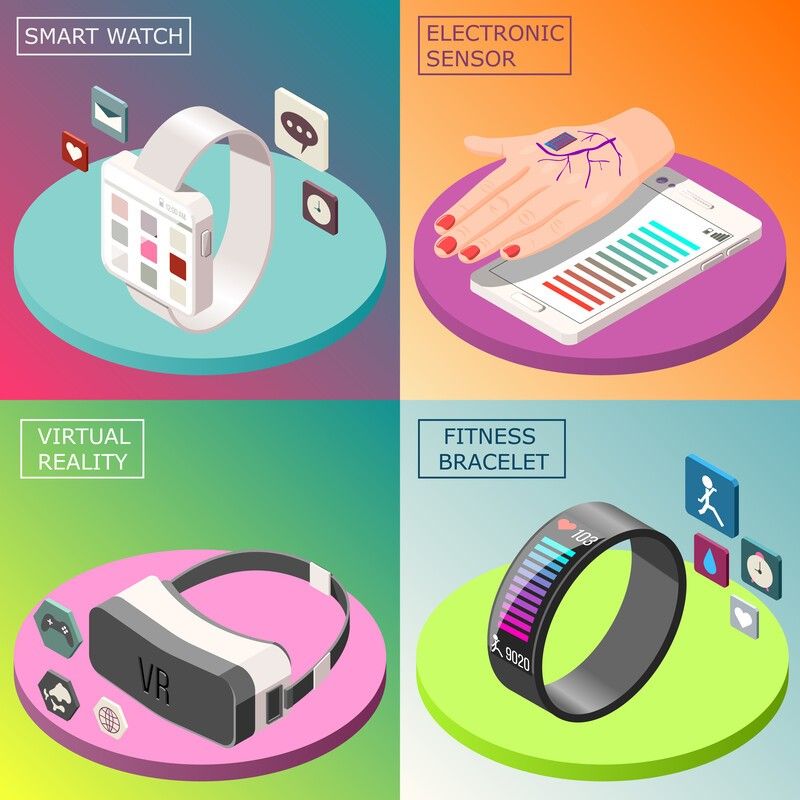
Wearable Devices Advantages and Disadvantages in 2025
The wearable devices advantages in 2025 address many limitations that plagued earlier generations, though new challenges emerge with increased sophistication.
Enhanced Advantages
- This year’s devices deliver clinical-grade accuracy across diverse skin tones and body types, eliminating the bias issues affecting previous optical sensors.
- Advanced algorithms compensate for motion artefacts during intense exercise, maintaining measurement precision.
- Battery innovations are set to extend operational duration to 10-14 days to reduce charging friction significantly, but this development is device dependent.
- The wearable technology of the future materialises in 2025 through non-invasive biomarker monitoring-continuous blood pressure tracking without cuffs, hydration status assessment, and even alcohol consumption detection.
- Artificial intelligence personalisation engines adapt to individual physiology, eliminating the one-size-fits-all limitations of generic algorithms.
- Behavioural science integration creates sophisticated nudge systems that sustainably modify health behaviours without generating notification fatigue.
Studies indicate 2025’s devices achieve greater long-term engagement compared to 2023 models through adaptive feedback mechanisms³.
Persistent Challenges
However, the wearable devices advantages and disadvantages balance sheet reveals continuing concerns. Data privacy risks escalate as devices collect increasingly sensitive health information—genetic predispositions inferred from physiological patterns could enable discrimination if inadequately protected. The digital divide widens as sophisticated devices remain financially inaccessible to disadvantaged populations.
Psychological dependency on constant health monitoring creates anxiety in some users, with emerging research identifying “data obsession syndrome” affecting 18% of intensive wearable users. Balancing actionable insights with obsessive monitoring represents an ongoing challenge.
Key Takeaways: 2025’s wearable devices advantages include clinical-grade accuracy, extended battery life, and sophisticated AI personalisation. Privacy concerns and psychological dependency issues require careful management alongside technological benefits.
Breakthrough Wearable Gadgets Launching This Year
The most anticipated wearable gadget innovations arriving in 2025 represent quantum leaps in capability and user experience.
- Non-invasive glucose monitoring finally achieves commercial viability through radiofrequency spectroscopy, liberating diabetics from finger-prick testing. Multiple manufacturers launch FDA-cleared continuous glucose wearables tech this quarter, with accuracy matching traditional monitors. But the widespread availability of such devices is still a work in progress.
- Smart ring technology advances dramatically with incorporation of blood pressure sensors and advanced sleep apnoea detection algorithms. These discrete devices appeal to users seeking comprehensive health monitoring without wrist-worn bulk.
- Biosensor patches achieving 30-day continuous wear eliminate charging requirements entirely through energy-harvesting technology. It is important to note that this technology is still in its early stages, and mainstream consumer adoption may still take a few years.
- Neural interface headbands entering the market enable meditation quality assessment through real-time brainwave analysis, whilst smart textiles with embedded sensors monitor biomechanics during rehabilitation exercises. The convergence of fashion and function reaches new heights as luxury brands collaborate with health technology companies, creating aesthetically appealing medical devices.
Key Takeaways: 2025’s breakthrough wearable gadgets include non-invasive glucose monitors, advanced smart rings, and month-long biosensor patches. Neural interfaces and smart textiles expand monitoring capabilities beyond traditional form factors.
Next-Generation Wearable Devices App Ecosystems
The wearable devices app platforms launching in 2025 harness large language models to translate complex physiological data into conversational health coaching. These AI assistants explain measurement significance, suggest personalised interventions, and answer health questions based on your unique data profile.
Integration depth reaches unprecedented levels-devices automatically adjust smart home environments for optimal sleep, coordinate with meal planning applications for metabolic optimization, and share relevant data with healthcare providers through secure blockchain protocols. The fragmentation plaguing earlier ecosystems resolves through universal health data standards enabling seamless cross-platform synchronisation.
Augmented reality integration arriving this year overlays real-time biometric data onto smart glasses, enabling athletes to optimise performance without breaking focus. Predictive analytics dashboards forecast health trajectories weeks ahead, empowering proactive lifestyle modifications before issues manifest.
Key Takeaways: 2025’s wearable devices app ecosystems leverage AI-powered health coaching and comprehensive smart home integration. Universal data standards eliminate platform fragmentation whilst augmented reality enables real-time biometric visualization.

FAQs
The different types of wearable technology include smartwatches, fitness trackers, smart rings, wearable health monitors, and augmented reality (AR) glasses, each designed for specific health, fitness, or technological functions.
The future of wearable technology will see more discreet, integrated devices that offer personalized health tracking, proactive wellness coaching, and immersive experiences, powered by AI, biosensors, and 5G connectivity.
References
- MarketsandMarkets. (2025). Wearable Technology Market Size, Share & Industry Trends, 2030. 2025 Wearable Technology Market Forecast
- Mahajan, A., Heydari, K., & Powell, D. (2025). Wearable AI to enhance patient safety and clinical decision-making. npj Digital Medicine Wearable AI to enhance patient safety and clinical decision-making – PMC
- Adrija. (2025, August 31). How adaptive feedback loops improve functional outcomes. Robo Bionics. How Adaptive Feedback Loops Improve Functional Outcomes – Robo Bionics
Get in Touch with Us
We’d love to hear from you—share your thoughts or ask a question!