

Written by: Aditi Koli, Content Writer
Reviewed & Edited by: Dr. Dooa Arif, Content Strategist
Estimated Reading Time: 7 minutes
TL;DR
Adult stem cells are multipotent cells found in various tissues throughout the body, playing a crucial role in regeneration and repair. Unlike embryonic stem cells, they maintain tissue-specific functions, continuously replacing damaged cells. These cells can differentiate into specific types within their tissue lineage, such as blood cells from bone marrow or neurons from the brain. They are capable of self-renewal and can proliferate in response to tissue injury. Adult stem cells are utilized in regenerative medicine, with applications like bone marrow transplants for blood disorders and emerging therapies for conditions like osteoarthritis and neurodegenerative diseases. While promising, challenges remain, such as ensuring safe cell delivery and long-term efficacy.
Adult stem cells represent undifferentiated cellular populations residing within specialised tissues throughout the human body after embryonic development concludes. Unlike their embryonic counterparts, these cells maintain tissue-specific roles, continuously replacing damaged or senescent cells whilst preserving tissue architecture and function throughout an individual’s lifetime.
These cellular populations exhibit remarkable longevity, persisting within protective microenvironments called “stem cell niches” that regulate their quiescent states and activation signals. When tissue injury occurs, biochemical signals prompt these dormant cells to proliferate and differentiate, initiating repair mechanisms that restore tissue integrity¹.
One of the most significant facts involves their discovery timeline—scientists identified them in bone marrow during the 1960s, fundamentally challenging previous assumptions that cellular differentiation represented an irreversible process. This breakthrough established regenerative medicine as a viable therapeutic discipline, opening pathways for treatments addressing previously intractable degenerative conditions.
The body harbours their numerous cell populations across diverse tissues, each possessing varying differentiation potentials and regenerative capacities. Understanding these cellular structures reveals how the body maintains homeostasis and repairs damage throughout decades of physiological stress and environmental exposure.
What Are the Properties of Adult Stem Cells?
Understanding the properties of these cells requires examining their defining characteristics that distinguish them from other cellular populations.
Multipotency and Differentiation Capacity
They demonstrate multipotency-the capacity to differentiate into multiple cell types within their tissue lineage, though not all possible cell types. This restricted plasticity ensures tissue-appropriate regeneration whilst preventing aberrant differentiation that could compromise organ function.
Research indicates that they can differentiate into specific cellular lineages predetermined by their tissue origin. Bone marrow ones generate blood and immune cells, whilst neural ones produce neurons and supporting glial cells. This lineage commitment represents both a functional advantage and therapeutic limitation².
Self-Renewal and Proliferation
These cells possess asymmetric division capabilities-producing both identical cell copies and differentiated progeny (replacing damaged cells). This balanced proliferation ensures continuous tissue maintenance without depleting the reservoir or causing uncontrolled growth.
The cell cycle regulation in them involves sophisticated molecular checkpoints that prevent excessive proliferation.
Studies demonstrate that approximately 90% of these exist in quiescent G0 phase, only entering active cell cycles when specific biochemical signals indicate tissue damage requiring repair³.
Core Functional Characteristics
- Clonogenic capacity: Single ones can generate entire cellular populations through successive divisions, demonstrating their fundamental regenerative potential
- Niche dependence: Specialised microenvironments provide biochemical signals regulating their behaviour, maintaining appropriate quiescence and activation patterns
- Plasticity variation: Different populations exhibit varying differentiation ranges, with haematopoietic ones showing more restricted lineages than mesenchymal populations
- Longevity mechanisms: These cells employ enhanced DNA repair systems and telomerase activity, enabling extended survival whilst minimising mutation accumulation
- Immunomodulatory properties: Many of them secrete factors suppressing excessive inflammation, contributing to tissue repair beyond simple cellular replacement
Key Takeaways: These cells exhibit multipotency within their tissue lineages, self-renewal through asymmetric division, and sophisticated regulatory mechanisms.
Adult Stem Cells Source: Tissue-Specific Locations
Identifying their source reveals the body’s distributed regenerative network. These cellular populations occupy distinct anatomical locations, each supporting specific tissue maintenance requirements.
Adult Haematopoietic Stem Cells
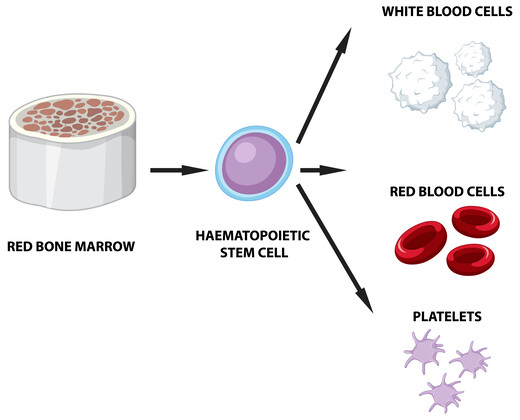
They reside primarily within bone marrow cavities, representing the most extensively studied populations. These cells generate all blood cell lineages-erythrocytes, leucocytes, and platelets-producing approximately 500 billion blood cells daily throughout adult life.
They demonstrate remarkable regenerative capacity, with single cells capable of reconstituting entire haematopoietic systems when transplanted. This property established bone marrow transplantation as the first successful niche therapy, now routinely treating leukaemias, lymphomas, and inherited blood disorders.
Hematopoietic stem cell transplantation is one of the most successful therapies currently in clinical practice, treating conditions like leukaemia, lymphoma, and aplastic anaemia.
Additional Tissue-Specific Sources
- Mesenchymal: Found in bone marrow, adipose tissue, and umbilical cord blood, these cells differentiate into bone, cartilage, muscle, and fat cells, offering therapeutic potential for orthopaedic and metabolic conditions like osteoarthritis.
- Neural: Residing in specific brain regions including the subventricular zone and hippocampal dentate gyrus, these populations generate neurons and glial cells throughout life, supporting cognitive function. They are therapeutically used for diseases like Alzheimer’s or Parkinson’s disease remains in the experimental stage.
- Epithelial: Located in intestinal crypts and skin basal layers, these rapidly dividing populations maintain barrier tissues experiencing continuous environmental exposure and cellular turnover.
- Cardiac: Recently identified populations within heart tissue show limited regenerative capacity, though their therapeutic potential remains actively investigated following myocardial injury. Recent studies are investigating gene therapy or cell therapy approaches (such as induced pluripotent stem cells) to enhance the regenerative potential of these cells.
- Hepatic: Liver-resident populations support remarkable hepatic regenerative capacity, enabling substantial liver mass restoration following injury or partial surgical resection.The regenerative medicine trials involving such hepatic cells for liver cirrhosis or acute liver failure are currently an active area of investigation.
Key Takeaways: Thus the cells occupy tissue-specific niches throughout the body, with bone marrow haematopoietic populations representing the most characterised source.
Therapeutic Applications and Clinical Potential
Research has progressed from theoretical potential to established medical interventions, with ongoing investigations expanding therapeutic applications across numerous conditions.
Current regenerative medicine utilises these cells primarily through bone marrow and peripheral blood stem cell transplantation for haematological malignancies and immune deficiencies. These procedures have treated over one million patients globally, demonstrating proof-of-concept for such therapeutics⁴.
Emerging applications investigate mesenchymal ones for osteoarthritis, cardiovascular disease, and autoimmune conditions. Clinical trials examine whether these cells’ immunomodulatory properties and differentiation capacities can restore tissue function in degenerative disorders resistant to conventional treatments.
Diving into Neural stem cell meaning and research explores potential interventions for neurodegenerative diseases including Parkinson’s disease and spinal cord injuries. Whilst challenges remain regarding cell delivery, integration, and long-term survival, preliminary studies demonstrate feasibility and safety profiles supporting continued investigation.
The field faces significant challenges including optimising cell isolation, expanding populations whilst maintaining stemness, ensuring appropriate differentiation, and preventing tumorigenesis. Regulatory frameworks continue evolving to balance innovation accessibility with patient safety, particularly regarding unproven treatments marketed without adequate clinical validation.
Key Takeaways: The therapies have progressed from experimental concepts to established haematological treatments, with emerging applications targeting degenerative conditions across multiple organ systems.
FAQs
The adult stem cell types are hematopoietic, mesenchymal or stromal, neural, epithelial or epidermal (skin), intestinal (crypt), muscle satellite, hepatic (liver), dental pulp, and endothelial progenitor stem cells.
Stem Cells are found in the bone marrow and blood, brain, skin, intestinal crypts, skeletal muscle, liver, dental pulp, adipose tissue, cornea or limbus, and other organ-specific niches (e.g., heart, lung, endothelium).
References
- Brunet, A., Goodell, M. A., & Rando, T. A. (2023). Ageing and rejuvenation of tissue stem cells and their niches. Nature Reviews Molecular Cell Biology, 24, 45–62 Ageing and rejuvenation of tissue stem cells and their niches | Nature Reviews Molecular Cell Biology
- National Institutes of Health. (n.d.). Stem cell basics. NIH Stem Cell Information. Retrieved October 13, 2025, from National Institutes of Health – Stem Cell Basics
- Ma, K., Fox, L., Shi, G., Shen, J., Liu, Q., Pappas, J. D., Cheng, J., & Qu, T. (2011). Generation of neural stem cell-like cells from bone marrow-derived human mesenchymal stem cells. Neurological Research, 33(10), 1083–1093 Generation of neural stem cell-like cells from bone marrow-derived human mesenchymal stem cells – PMC
- Arai, F., & Suda, T. (2008). Quiescent stem cells in the niche. In StemBook [Internet]. Harvard Stem Cell Institute Quiescent stem cells in the niche – StemBook – NCBI Bookshelf
- Gratwohl, A., et al. (2015). One million haemopoietic stem-cell transplants: A retrospective observational study. The Lancet Haematology, 2(3), e91–e100 The Lancet – Stem Cell Transplantation One million haemopoietic stem-cell transplants: a retrospective observational study – The Lancet Haematology
Get in Touch with Us
We’d love to hear from you—share your thoughts or ask a question!