
Written by: Aditi Koli, Content Writer
Reviewed & Edited by: Dr. Dooa Arif, Content Strategist
Estimated Reading Time: 8 minutes
TL;DR
Restorative yoga is a calming practice that uses supported poses to activate the parasympathetic nervous system, promoting deep relaxation and reducing stress. By holding poses for extended periods (5-20 minutes), restorative yoga reduces cortisol levels and improves heart rate variability, which are key markers of stress. Essential poses, such as Supported Child’s Pose and Legs-Up-The-Wall, offer therapeutic benefits for conditions like sleep disruption, pain relief, and neck tension. Targeted sequences help improve sleep quality, alleviate back pain, and ease shoulder tension. With its focus on gentle stretching and breath control, restorative yoga supports both mental and physical well-being, providing a holistic approach to health and relaxation.
Restorative yoga represents a scientifically-validated approach to stress reduction that activates the parasympathetic nervous system-your body’s natural relaxation response.
Unlike dynamic yoga styles, restorative practices utilise extended holds (typically 5-20 minutes) with substantial prop support, allowing complete muscular relaxation whilst maintaining therapeutic alignment.
Research demonstrates that regular restorative practice significantly reduces cortisol levels and improves heart rate variability, key biomarkers of physiological stress¹.
Whether you’re managing injury rehabilitation, chronic fatigue, or simply seeking deeper relaxation techniques, understanding how to do restorative poses properly ensures optimal therapeutic benefits whilst preventing contraindications.
Essential Poses for Restorative Practice
Foundational Restorative Asanas
The following poses for restorative yoga create the cornerstone of therapeutic practice, each offering distinct physiological benefits:
- Supported Child’s Pose (Balasana): Places a bolster longitudinally beneath the torso, promoting diaphragmatic breathing whilst gently stretching the lumbar spine and releasing hip flexor tension
- Place a long bolster under your torso; forehead on a block if needed.
- Breathe into the back and sides of the ribs to soften the lower back.
- Hips sink toward heels to ease hip-flexor and spine tension.
- Stay 2–5 minutes per side (turn head halfway).
- Legs-Up-The-Wall Pose (Viparita Karani): Facilitates venous return and lymphatic drainage whilst reducing lower extremity oedema, particularly beneficial after prolonged standing or physical exertion
- Sit side-on to a wall, swing legs up, hips a few inches from the wall.
- Calves rest on the wall; shoulders and jaw relax.
- Helps tired, heavy legs feel lighter after standing.
- Stay 5-10 minutes; bend knees and roll to the side to exit.
- Reclined Bound Angle Pose (Supta Baddha Konasana): Opens the pelvic floor and hip adductors whilst supporting thoracic expansion, creating space for enhanced respiratory capacity
- Lie back with a bolster along the spine; soles of feet together, knees supported by blocks.
- Chest opens gently to make breathing feel easier.
- Inner thighs and hips release without strain.
- Stay 3-8 minutes, adjusting props so knees and lower back feel supported.
- Supported Bridge Pose (Setu Bandhasana): Utilises a block beneath the sacrum to provide gentle spinal traction and hip flexor lengthening without muscular engagement
- Lie on your back, feet hip-width; lift hips and place a block under the sacrum (lowest bony part).
- Let hips be heavy on the block-no effort in the glutes.
- Front hips and belly soften; lower back decompresses.
- Stay 2-5 minutes, then remove block and slowly roll down.
- Corpse Pose with Bolster (Supported Savasana): Elevating the knees reduces lumbar compression whilst allowing complete neuromuscular integration and conscious relaxation
- Lie back with a bolster or pillow under knees; small pillow under head if helpful.
- Arms at 30–45°, palms up; eyes closed, jaw soft.
- Takes pressure off the lower back and encourages full-body rest.
- Stay 5-10 minutes, noticing the breath and letting the body settle.
Key Takeaways: Essential restorative poses utilise substantial prop support to eliminate muscular engagement, allowing extended holds that trigger deep physiological relaxation.
Targeted Sequences for Specific Wellness Goals
Restorative Poses for Sleep Enhancement
Sleep disruption affects neurological recovery and metabolic regulation. Specific restorative poses for sleep activate the ventral vagal complex, promoting the physiological downregulation necessary for quality rest. Practise these poses 60-90 minutes before bedtime for optimal circadian alignment.
Supported Forward Fold calms the nervous system through gentle spinal flexion, whilst Supine Spinal Twist releases thoracic tension that impedes comfortable sleep positioning. Research indicates that consistent evening restorative practice improves sleep latency by an average of 12 minutes and enhances REM cycle duration².
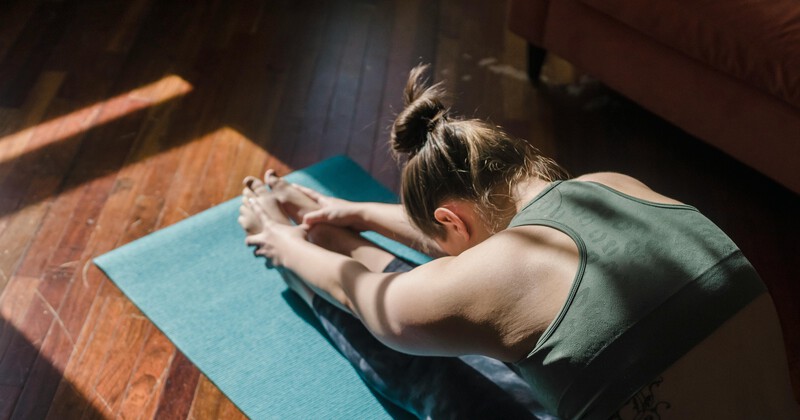
Practice the Supported Forward Fold (Paschimottanasana)
- Sit with legs extended; place a bolster (or 2 pillows) lengthwise on your thighs. Loop a strap around the feet if helpful.
- Inhale to lengthen the spine; hinge from the hips and fold forward, resting your torso and forehead on the bolster (add blocks if it’s low).
- Soften shoulders and jaw; keep a gentle bend in the knees or a rolled blanket under them for comfort.
- Breathe slowly for 2-5 minutes; to come out, walk the hands back and uncurl the spine to sit tall.
The Supine Spinal Twist (Supta Matsyendrasana)
- Lie on your back; draw the right knee to your chest, left leg long.
- Guide the right knee across your body to the left; keep shoulders grounded.
- Reach the right arm out to the side; turn head to the right and soften the belly.
- Breathe 1–3 minutes; return to centre and switch sides (use a pillow under the knee if needed).
Restorative Yoga Poses for Neck and Shoulders
Cervical tension represents one of the most prevalent chronic pain presentations in modern populations. Restorative yoga poses for neck and shoulders address this through passive traction and muscular release. Supported Fish Pose opens the anterior thoracic region whilst allowing cervical muscles to release without weight-bearing stress.
Supported Fish Pose (Salamba Matsyasana)
- Place a bolster lengthwise along your spine; sit with sacrum at the bolster’s edge and lie back.
- Add a block or rolled blanket under the head if the neck feels compressed.
- Let shoulders drape open, arms at 30-45°, palms up; soles can touch or legs extend.
- Breathe into the chest for 2-5 minutes, then roll to one side to exit slowly.
Thread the Needle variation, performed with substantial shoulder support, releases rotator cuff tension and improves scapular mobility. These targeted interventions prove particularly effective for individuals experiencing forward head posture consequences.
Thread the Needle (Pārśva Bālāsana)
- Start on hands and knees; wrists under shoulders, knees under hips.
- Inhale, then exhale and slide your right arm under the left, palm up, lowering right shoulder and cheek to the mat.
- Keep hips stacked; left hand stays pressing, or walk it forward to deepen the stretch.
- Breathe 1–2 minutes; press into left hand to unwind, then switch sides.
Restorative Yoga Poses for Lower Back Pain
Lumbar discomfort affects approximately 80% of adults during their lifetime, making restorative poses for lower back pain clinically significant. Supported Child’s Pose with hip elevation reduces disc compression whilst promoting paraspinal muscle relaxation.
Constructive Rest Position-supine with knees bent and feet flat-allows the psoas major to release whilst supporting neutral spinal alignment. This position proves especially therapeutic for individuals with herniated disc presentations or chronic lumbar strain patterns.
Key Takeaways: Targeted restorative sequences address specific wellness challenges including sleep dysfunction, cervical tension and lumbar pain.
FAQs
You can try Supported Child’s Pose, Legs-Up-the-Wall, Reclined Bound Angle, Supported Bridge, Supine Spinal Twist, and Supported Savasana.
The benefits of restorative yoga are stress relief, calmer nervous system, better sleep, reduced muscle tension, easier back, neck pain, improved joint mobility, enhanced circulation, lymph flow, and deeper breathing & body awareness.
References
- Corey, S. M., et al. (2014). Effect of restorative yoga vs. stretching on diurnal cortisol and stress perception in healthy adults. International Journal of Yoga, 7(2), 113–118. International Journal of Yoga – Effects of Restorative Yoga
- Alghosi, M., et al. (2025). The effect of chronic yoga interventions on sleep quality in adults: A scoping review. Journal of Clinical Sleep Medicine, 21(4), 365–374. Journal of Clinical Sleep Medicine – Yoga and Sleep Quality
Get in Touch with Us
We’d love to hear from you—share your thoughts or ask a question!